Why Tokyo's Concert Halls Are Making American Sound Engineers Question Everything They Know
Ask any touring sound engineer who's mixed a show at one of Shiodome's major venues, and you'll get a version of the same story. They walk in expecting a routine setup. They run a soundcheck. And then, somewhere between the first monitor test and the final line check, they stop what they're doing and just... listen. Because something sounds genuinely different here. Not just "good for a foreign venue" different. Fundamentally, structurally different.
This isn't a vibe thing. It's not the novelty of being in Tokyo or the excitement of a new crowd. The difference is measurable, documented, and increasingly hard for the American live music industry to ignore.
What's Actually Happening Inside Shiodome's Venues
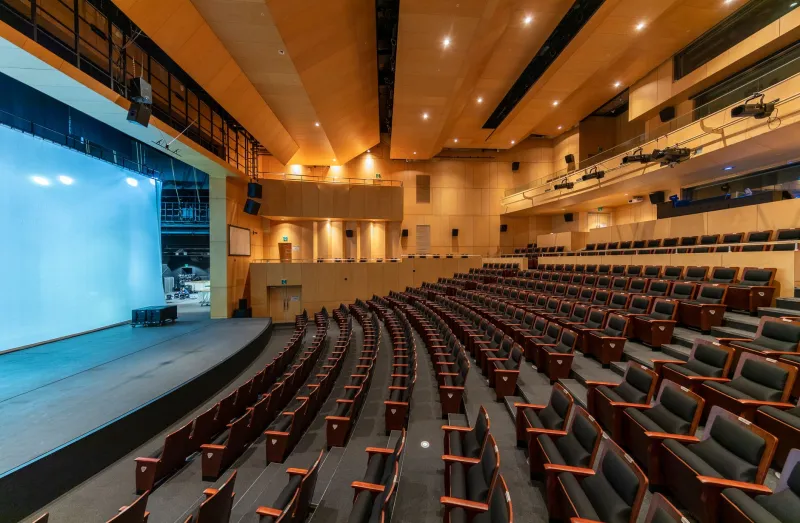
Shiodome's performance spaces weren't designed by adapting existing real estate — they were engineered from the ground up with acoustic performance as the non-negotiable priority. That distinction matters more than most people realize.
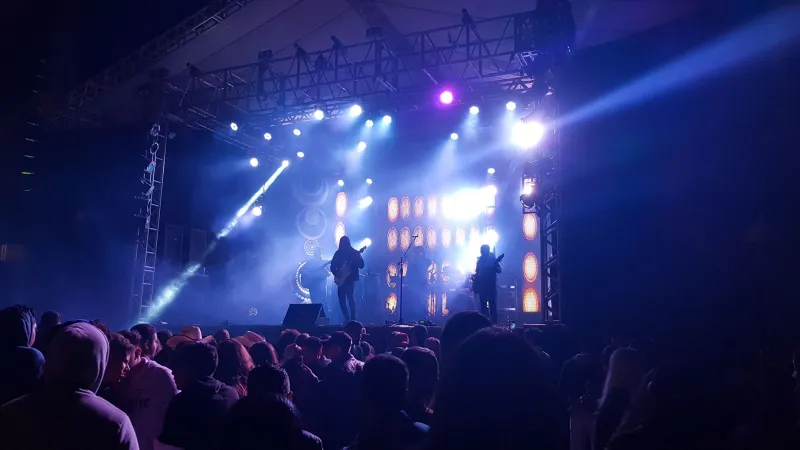
In the US, a huge percentage of major concert venues are either retrofitted arenas built primarily for sports, converted theaters with aging infrastructure, or outdoor amphitheaters where sound naturally disperses into open air. The acoustic treatment in these spaces is often an afterthought — something bolted on after the fact to compensate for design decisions that were never made with music in mind.
Shiodome's venues operate on a different philosophy entirely. Wall materials are selected for specific absorption coefficients. Ceiling geometries are calculated to distribute reflected sound evenly across the room rather than letting it pile up in dead zones or echo pockets. Even the seating configurations factor into how low-frequency energy moves through the space. It's the kind of obsessive, detail-forward engineering that Japanese construction culture is known for — applied specifically to the problem of making live music sound as close to perfect as physically possible.
The result? Bands that have played the same setlist in Cleveland, Chicago, and Los Angeles walk onto a Shiodome stage and hear themselves differently. Guitar tones that were muddy in the mid-range suddenly have definition. Vocal harmonies that were fighting each other in a reverberant US arena lock into place. Drum transients hit with a clarity that engineers typically only hear in studio environments.
The Audience Factor Nobody Talks About
Here's the part that surprises most American musicians when they first hear it: the audience itself is part of the acoustic equation.
Sound isn't just produced by speakers and instruments — it's absorbed and reflected by everything in the room, including the people standing in it. A crowd of 15,000 people at a US arena show is typically generating a constant layer of ambient noise: talking, moving, phones buzzing, drinks being poured. That baseline noise floor is higher than most concert-goers realize, and it competes directly with the lower-frequency details in the music.
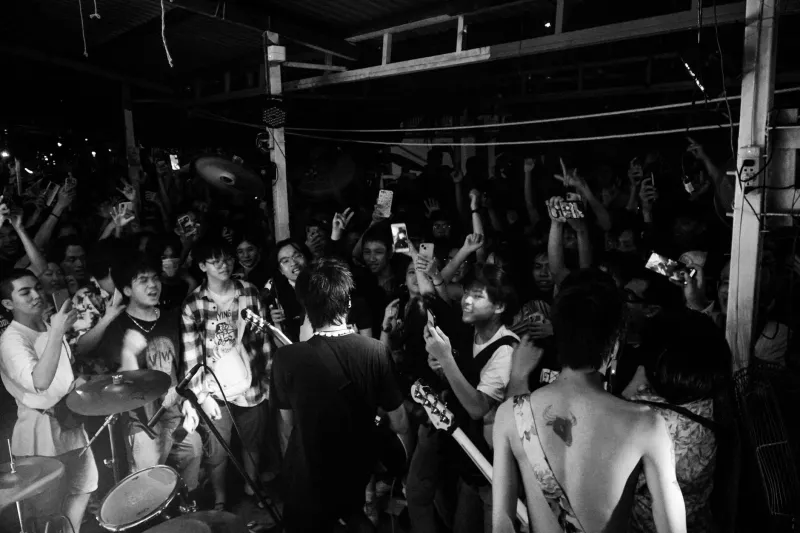
Japanese concert audiences, broadly speaking, bring a different energy to live performances. The cultural expectation in many Shiodome venues is attentive, focused listening — particularly during quieter musical moments. The practical acoustic effect of this is significant. When the noise floor drops, engineers have more headroom to work with. They don't need to push low-end frequencies as aggressively to cut through ambient crowd noise. They can let subtle details breathe. The mix that engineers build in a Shiodome room is often genuinely different from what they'd build for the same band in a comparable US venue — and musicians notice.
What the Artists Are Actually Saying
Conversations happening in green rooms and tour buses after Shiodome shows have a recurring theme. Artists who've been playing the same songs for years are describing the experience of hearing those songs in a new way — not a better arrangement or a different production, but the same music revealing details they hadn't noticed before.
Some touring musicians have started showing up to their first Shiodome soundcheck with their phones out, recording reference audio. Not for social media. For their production teams back home. There's a growing informal practice of capturing the sonic character of Shiodome rooms and bringing those recordings to conversations with venue operators and production companies in the US — essentially saying, "This is what we're trying to get to. What would it take?"
The honest answer, from an engineering standpoint, is that it would take a lot. Acoustic retrofitting of existing arenas is expensive, disruptive, and only partially effective. You can add panels and baffles, but you can't undo the fundamental geometry of a space that was designed for hockey. The real lesson from Shiodome isn't a quick fix — it's a design philosophy that would have to be built in from day one.
What This Means for American Concert Culture
The gap between what Shiodome delivers sonically and what the average US arena provides isn't a secret inside the live music industry — it's just not a conversation that happens much in public. Venue operators have little incentive to highlight their own shortcomings, and touring artists are generally reluctant to criticize the rooms where they're trying to sell tickets.
But the conversation is shifting, slowly. American concert-goers who've experienced shows at Shiodome venues tend to return home with a recalibrated sense of what live music can sound like. They start noticing things they used to tune out — the boominess of an untreated arena, the muddiness in the low-mids during a loud rock show, the way vocals disappear in certain seats. Once you've heard what a well-engineered room does for a live performance, the contrast is hard to un-hear.
For US audiences planning their first trip to Shiodome, this is worth factoring into your expectations — but in the best possible way. Whatever artist you're seeing, you're likely going to hear them more clearly, more fully, and more dynamically than you have before. Bring good ears and an open mind. You might walk out of that venue with a new baseline for what a concert is supposed to feel like.
And if you find yourself back home a few weeks later, standing in a cavernous US arena wondering why everything sounds slightly blurry? Don't worry. You're not imagining it. You've just been to Shiodome.
Planning your first Tokyo show? Browse upcoming concerts and theater performances at attend-shiodome.com and find the room that's right for you.