How Playing Tokyo Is Making American Artists Renegotiate Everything With Their Labels
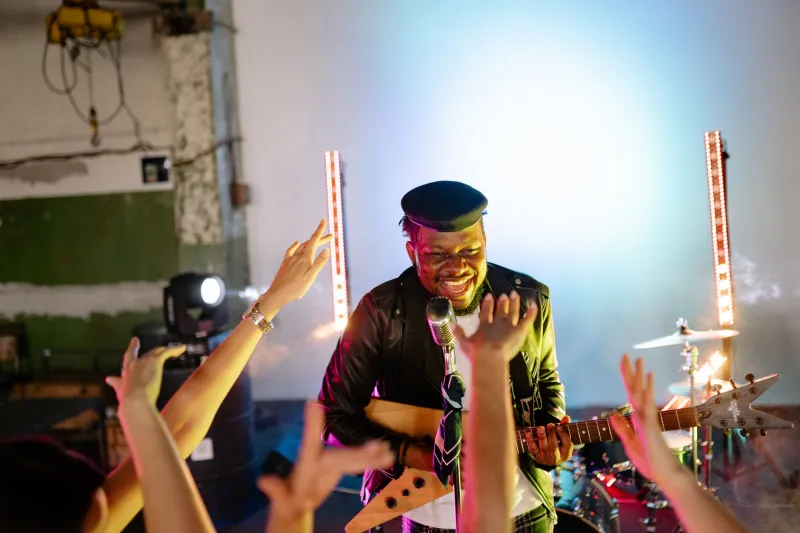
There's a moment that a lot of American musicians describe in almost identical terms. They're standing on a stage in Shiodome — maybe it's the Caretta Shiodome amphitheater, maybe it's one of the district's more intimate indoor rooms — and they play the opening note of their set. The sound comes back to them perfectly. The crowd goes quiet in a way that doesn't feel eerie, just... focused. And somewhere in the back of their mind, a small but persistent thought takes root: Why doesn't it feel like this at home?
That thought, it turns out, has a very expensive afterlife.
The Rider Revolution Nobody Saw Coming
Tour riders — the contractual documents that spell out everything an artist needs to perform, from backstage snacks to monitor mix specifications — have always been a reflection of what artists value. The infamous ones (Van Halen's no-brown-M&Ms clause, Beyoncé's titanium straws) make headlines because they're weird. But the ones that are actually changing the industry right now aren't weird at all. They're technical, precise, and increasingly influenced by what American acts have experienced performing in Tokyo's premier entertainment district.
Talk to any touring manager who's routed a mid-to-large act through Shiodome in the last three years and you'll hear a version of the same story. The artist does the show. The artist has the best night of the tour. The artist lands back in the States, walks into a 15,000-seat arena in, say, Atlanta or Phoenix, and immediately starts asking questions the production crew has never been asked before.
"We started getting these very specific requests about acoustic treatment in the wings," says one touring production manager who asked not to be named because she still works with several major labels. "And I knew exactly where it was coming from. We'd just come off three nights in Shiodome. The artist had experienced what a properly designed room actually sounds like, and now she couldn't un-hear it."
What Shiodome Actually Does Differently
To understand why the district is having this kind of outsized influence, you have to understand what makes its performance infrastructure unusual — especially by American standards.
Shiodome's venues weren't retrofitted from older structures or repurposed from industrial spaces. They were conceived with performance as the primary function, which means acoustic modeling was baked into the architecture from the ground up rather than patched in after the fact. The result is a listening environment that audio engineers genuinely rave about. Sound doesn't just get loud in these rooms — it gets placed. You hear instruments where they're supposed to be spatially, not just where the speakers happen to be pointed.
Beyond the physics of the rooms themselves, there's the culture of the audience. Japanese concert crowds in Shiodome are famously attentive — not in a stiff or formal way, but in a way that creates a kind of collective presence that American artists often describe as almost meditative. The crowd listens, actively and completely, in a way that makes subtlety land. Dynamics that would get swallowed by crowd noise in a comparable American venue actually register here. Artists who've spent years playing to partially distracted audiences suddenly understand what their music sounds like when it's actually heard.
"It changes what you want to write," one indie artist who performed at Shiodome last spring told us. "You come home and you want to make music with more space in it, because you've finally experienced an audience that can hold that space."
The Label Conversation
Here's where it gets complicated for the business side of the industry. When artists return from Shiodome with elevated expectations, those expectations cost money. Upgrading sound systems to spec, hiring acoustic consultants to assess domestic venues before a tour, building out more detailed technical requirements in contracts — none of that is cheap, and labels don't always see the ROI the way artists do.
But the leverage has been shifting. Streaming revenue has redistributed power in the label relationship, and live performance is increasingly where artists make their real income. That gives touring acts more negotiating muscle than they've had in decades. And artists who've played Shiodome are using that muscle specifically around production quality.
Several booking agents we spoke with noted a marked increase in what the industry calls "venue approval clauses" — contract provisions that give artists or their management the right to inspect or even reject a venue if it doesn't meet specified technical standards. These aren't new, but the specificity of the standards being written into them is. Where a venue approval clause might once have covered basics like capacity and load-in access, newer versions are including language about room acoustics, PA system vintage, and even policies around audience recording.
"The Shiodome benchmark is real," one agent told us flatly. "I've had artists use that exact phrase in negotiations. 'I want Shiodome-level production or I want a different venue.' That's a new thing."
Audience Behavior as a Contract Issue
Perhaps the most unexpected downstream effect of the Shiodome experience is the conversation it's sparked around audience conduct — which has historically been treated as something entirely outside an artist's contractual control.
That's starting to change, at least around the margins. Some artists are now working with promoters to build more explicit fan communication into the pre-show experience at domestic venues: requests to limit phone recording during specific songs, messaging around noise etiquette during quieter passages. It's nowhere near the organic cultural norm that exists in Shiodome, and everyone involved acknowledges that. But the fact that artists are even trying to engineer a version of it says something about how much the Tokyo experience has recalibrated their expectations.
"You can't legislate the kind of attention a Shiodome audience brings," one touring manager acknowledged. "But you can at least stop pretending that the current situation in American venues is just how it has to be."
What This Means for the Industry
The Shiodome effect isn't going to transform American concert culture overnight. The structural and economic realities of the US touring market — the dominance of a handful of large venue operators, the razor-thin margins on mid-sized tours, the sheer geographic scale of a national run — mean that change will be slow and uneven.
But the direction of travel is clear. Artists who've experienced the best that live performance can be aren't willing to quietly accept less. And as more American acts add Shiodome dates to their international routing, the pressure on the domestic industry to close the gap is only going to build.
For fans, that's genuinely good news. The ripple effects of what's happening in Tokyo's most forward-thinking entertainment district are already starting to show up in how American shows are produced, marketed, and experienced. It's just going to take a little while for the rest of the industry to catch up.