Close Enough to Touch: How Shiodome Is Rewriting the Rules of Fan-Artist Connection
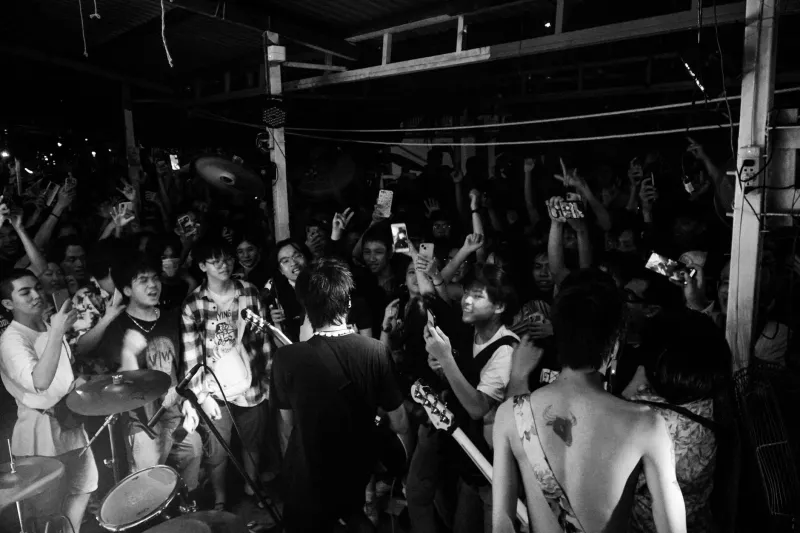
There's a moment that keeps coming up when you talk to Americans who've attended shows at Shiodome. It usually happens after a performance, somewhere between the final bow and the walk back to the train. A performer — sometimes a household name, sometimes a rising act — steps into a corridor, a foyer, or a small anteroom adjacent to the main hall. No publicist hovering with a clipboard. No security wall three people deep. Just the artist, the audience, and a kind of unhurried openness that most American fans genuinely don't have a framework for.
"I kept waiting for someone to tell me the interaction was over," said one Chicago-based music journalist who attended a sold-out run of shows at Shiodome last spring. "That person never came."
What she's describing isn't an accident or a quirk of scheduling. It's a reflection of something deeply embedded in how Shiodome — and Japanese entertainment culture more broadly — thinks about the relationship between performers and the people who show up to see them.
The American Model, and Why It Feels the Way It Does
Let's be honest about what fan access typically looks like in the States. You've got the VIP package tier — usually priced at two to four times the cost of a standard ticket — that might get you a photo op lasting under a minute, a pre-signed piece of merchandise, and the vague sense that you've paid for proximity rather than connection. Meet-and-greets at major US arenas are often structured less like genuine encounters and more like efficient processing: move through the line, hit your mark, smile, exit.
That's not a knock on artists. It's a structural reality. American celebrity culture has spent decades building walls — sometimes for legitimate safety reasons, sometimes for brand management, often for both. The result is a concert ecosystem where distance is the default and closeness is a commodity.
Shiodome operates on a different premise entirely.
What Actually Happens Here
At venues across the Shiodome entertainment district, post-show artist interaction is woven into the fabric of the event rather than bolted on as an upsell. The architecture helps — many of Shiodome's performance spaces are designed with transitional areas that naturally encourage lingering, conversation, and the kind of low-pressure mingling that makes genuine exchanges possible. (If you haven't read our deep-dive into the design philosophy behind these spaces, it's worth your time.)
But the physical environment only enables what the cultural attitude makes possible. In Japan, the concept of otsukaresama — roughly translatable as acknowledging someone's effort and expressing gratitude for it — creates a social permission structure around post-performance interaction that simply doesn't exist in the same way in the US. Fans aren't just spectators; they're participants in a shared effort. And artists, in turn, tend to treat the post-show period as part of the performance's completion rather than its aftermath.
Singer-songwriter Marcus Delray, who has toured both the US festival circuit and performed two headline nights at Shiodome in the past eighteen months, put it plainly in a conversation with our editorial team: "In the States, I'm protecting myself from the crowd. At Shiodome, I'm part of it. Those aren't the same show, even when I'm playing the same songs."
The Fan Side of the Equation
It's not just artists who behave differently. Japanese audiences — and increasingly, the international fans who make the trip specifically to experience Shiodome's entertainment scene — bring a different set of expectations to the room.
American concert culture tends to reward assertiveness. Getting to the front, pushing for the best angle, angling for a selfie — these are understood as normal fan behaviors. At Shiodome, the dominant energy is something closer to collective appreciation. Fans wait. They observe. They express enthusiasm in ways that feel considered rather than competitive. And paradoxically, this restraint often creates more space for genuine interaction than the elbowing and jostling that define the front rows of a US amphitheater.
"Everyone kept asking me if I was okay, if I needed anything," said Priya Nambiar, a Houston-based K-pop and J-pop fan who attended her first Shiodome show two years ago and has since returned three times. "Not the staff — just other fans. It was this weird, wonderful thing where the whole audience was kind of taking care of each other."
That atmosphere doesn't just make the show more enjoyable. It makes the post-show interaction feel safe in a way that changes what's possible. When you're not bracing for chaos, you can actually be present.
What This Reveals About Celebrity Culture
Here's the uncomfortable question underneath all of this: has American celebrity culture accidentally trained us to accept bad fan experiences as the price of admission?
The velvet rope model — where access is rationed, priced, and controlled — has become so normalized that many US concertgoers don't even think to question it. You buy the ticket, you attend the show, you go home. The artist is a figure on a stage, not a person in a room. That's just how it works.
Shiodome, almost without trying to make a statement about it, demonstrates that this isn't inevitable. It's a choice — or more accurately, an accumulation of choices about venue design, cultural norms, artist expectations, and what we collectively decide a live entertainment experience is actually for.
Marcus Delray again: "I came back from my first Shiodome run and genuinely didn't know how to play a show at home for a while. Not because I'd lost my ability — because I'd gained a different sense of what was possible. That's a hard thing to unknow."
Bringing It Home
None of this means American concert culture is broken beyond repair, or that every US venue is doing it wrong. But it does suggest there's something worth examining in the gap between what we've accepted as normal and what a place like Shiodome makes feel ordinary.
For Americans planning their first trip to Tokyo — or their fifth — the shows at Shiodome are worth attending not just for the music, the theater, or the spectacle. They're worth attending for what they reveal about what a live experience can be when the walls come down a little.
You might find yourself, somewhere between the final bow and the walk to the train, having a conversation you didn't expect with someone you came here specifically to see. And you might spend the whole flight home wondering why that doesn't happen everywhere.
Browse upcoming shows and events at attend-shiodome.com — and start planning the trip that changes how you think about live entertainment.