No Barriers, No Confusion: How Shiodome Quietly Built the Most Welcoming Entertainment District on Earth
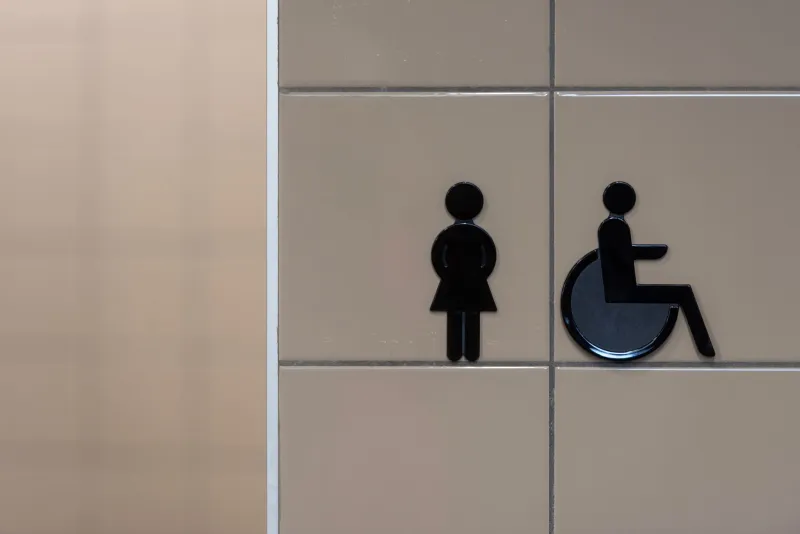
Walk into a major arena in, say, Los Angeles or Chicago. If you use a wheelchair, you're probably navigating a maze of elevators that may or may not be working, sightlines that were clearly an afterthought, and staff who've been trained to point rather than assist. If you don't speak English fluently, good luck figuring out which entrance is yours or where the accessible restrooms actually are. The signage assumes you already know.
Now walk into almost any venue in Shiodome.
The difference isn't subtle. It's structural. And for the growing number of American travelers making the trip to Tokyo's most dynamic entertainment district, it's becoming one of the most talked-about parts of the experience — not because it's flashy, but because it's so quietly, matter-of-factly done.
What "Accessible" Actually Means Here
In the US, accessibility in entertainment venues is largely a compliance conversation. The ADA sets a floor, and most venues build to that floor — no higher. Wheelchair seating gets tucked into corners with compromised views. Assistive listening systems exist but require you to know to ask for them. Accessible entrances are often separate, slower, and subtly othering.
Shiodome's venues operate from a different starting assumption: that accessibility is part of the guest experience, not a legal checkbox bolted onto it afterward. That philosophical shift produces wildly different outcomes in practice.
Take sightlines. Wheelchair-designated spaces at venues in the Shiodome corridor are typically positioned with the same care given to premium seating — not shoved to the side, not elevated to a platform that isolates attendees from the rest of the crowd. The design intent is integration, not accommodation. That's a meaningful distinction.
Elevator placement follows similar logic. Rather than a single service elevator tucked near a loading dock, multi-level venues tend to distribute vertical access throughout the building, reducing the distance any attendee needs to travel to reach their level. It's the kind of decision that costs more at the design stage and saves enormous frustration on event night.
The Multilingual Infrastructure That American Venues Don't Bother With
Here's where things get really interesting for international visitors. Shiodome draws a substantial global audience — and the district's venues have responded with multilingual infrastructure that goes well beyond a translated website.
Wayfinding signage in major venues typically appears in Japanese, English, and often Chinese and Korean as well. Not just the big directional signs — we're talking restroom markers, concession labels, emergency exit instructions, and accessibility feature callouts. The assumption baked into the design is that not everyone reading the sign shares a first language, and the venue's job is to communicate with all of them.
For American concert-goers traveling to Shiodome, this has a somewhat ironic effect: you feel more informed as a non-Japanese speaker than you often do navigating a stadium in your own country where the signage is technically in your language but still somehow confusing.
Staff training compounds this. Venue employees at Shiodome's major performance spaces are routinely trained in basic English for guest interactions — not fluent, but functional. More importantly, they're trained to anticipate that international attendees may need extra orientation, and to offer it proactively rather than waiting to be asked. That's a hospitality posture, not just a language skill.
Assistive Technology, Done Right
American venues have been slow to adopt modern assistive technology at scale. Hearing loops — induction systems that transmit audio directly to hearing aids with a telecoil setting — exist in some US theaters but are far from standard. Apps that provide real-time captioning or sign language interpretation for live events are still largely experimental.
Several of Shiodome's performance spaces have integrated hearing loop systems as baseline infrastructure, not add-ons. For deaf and hard-of-hearing attendees, this changes the nature of the experience entirely. You're not borrowing a clunky assistive listening device from the box office and hoping the battery holds — you're using your own hearing aid as it was designed to work, with the venue's system doing its job invisibly.
For theater productions, multilingual captioning systems — often displayed on discrete screens positioned to avoid disrupting the sightlines of non-captioning audience members — are increasingly common. Some venues have experimented with seat-back display systems for individual caption tracks, allowing multiple languages to run simultaneously without visual clutter for the broader audience.
This matters enormously for American travelers attending Japanese-language productions. The barrier to entry for a non-Japanese speaker wanting to experience a traditional theater performance or a contemporary Japanese drama drops significantly when caption infrastructure is thoughtfully implemented.
The "Guest-First" Philosophy and Why It's Rare
What ties all of this together isn't technology or budget — it's philosophy. Shiodome's entertainment venues, by and large, operate from the premise that the guest's experience of arriving, orienting, accessing, and enjoying the event is as important as the event itself. Removing friction for any subset of guests isn't charity; it's craft.
American entertainment culture tends to treat the performance as the product and everything surrounding it as logistics. Tokyo's approach — at least in Shiodome's concentrated, purpose-built entertainment corridor — treats the full guest journey as the product. The show is part of it. Getting to your seat without stress is part of it. Understanding where you are and what's happening around you is part of it.
For disabled American travelers especially, this distinction is profound. Many have learned to call ahead, request accommodations in writing, show up early to navigate unpredictable access routes, and accept that their experience will probably involve some friction. Arriving somewhere that has already anticipated and solved those problems — without being asked — is genuinely disorienting in the best way.
What American Promoters Could Actually Learn
The gap isn't insurmountable. Some of what Shiodome does well is expensive to retrofit but cheap to build in from scratch. Hearing loop infrastructure, for instance, is significantly more cost-effective when installed during construction than added to an existing venue. The same is true for distributed elevator placement and integrated multilingual signage systems.
What's harder to export is the underlying attitude. American venues are largely organized around throughput — getting as many people in and out as efficiently as possible. Shiodome's venues seem organized around experience — making each guest's interaction with the space feel considered. Scaling that shift in orientation is a cultural challenge more than a technical one.
But the demand is clearly there. American travelers who've attended events in Shiodome come home changed — not just by the performances, but by what it felt like to be genuinely, thoughtfully welcomed by a venue. That feeling travels. And increasingly, it's making people ask uncomfortable questions about why the same standard doesn't exist at home.
Shiodome isn't perfect. No entertainment district is. But it's doing something the US entertainment industry has largely declined to prioritize: building spaces where the question "can I actually experience this?" has the same answer for everyone. That's not a small thing. And for a growing number of American visitors, it's becoming one of the most compelling reasons to book the flight.


