The Smart Traveler's Calendar: How to Time Your Shiodome Trip for Better Seats and Bigger Savings
Photo: Basile Morin, CC BY-SA 4.0, via Wikimedia Commons
Most Americans plan their Shiodome trip around one of two things: a specific show they already have a ticket for, or a general "I want to go to Tokyo" impulse with entertainment as a bonus. Both approaches work. Neither one is optimal.
The travelers who get the most out of Shiodome — best seats, most diverse programming, lowest prices, fewest crowds — are the ones who understand how the district's entertainment calendar actually functions. It has patterns. It has pressure points. And it has windows that most visitors walk right past without realizing they were there.
This guide breaks it down.
First, Understand the Two Calendars Running Simultaneously
Shiodome's entertainment schedule is shaped by two overlapping forces: Japan's domestic tourism calendar and the international touring circuit. They don't always align, and the gaps between them are where smart travelers find their opportunities.
Japan's domestic peak seasons — Golden Week in late April through early May, Obon in mid-August, and the New Year holiday window — flood Shiodome with local visitors. Venues are packed, ticket prices for popular shows spike, and the logistical experience (trains, restaurants, hotel rates) gets noticeably more complicated. These are not ideal windows for first-time visitors who want a relaxed, exploratory experience.
The international touring calendar, meanwhile, tends to cluster big-name acts in the spring (March through May) and fall (September through November), when weather is favorable and artists are moving through Asia on world tours. These windows bring the most high-profile programming — but also the most competition for tickets.
The Underrated Case for January and February
Here's a window that doesn't get nearly enough credit: the post-New Year lull that runs from roughly mid-January through February. Domestic tourism drops sharply after the holiday season. Hotels cut rates. Restaurants have availability. And Shiodome's venues? They're still running full programming.
Japanese arts and performance organizations don't take February off. Theater companies use this period for productions that are ambitious precisely because they don't need to compete with blockbuster touring acts for audience attention. You'll find contemporary dance, experimental theater, classical music, and mid-sized J-pop acts playing venues that would be sold out three months later.
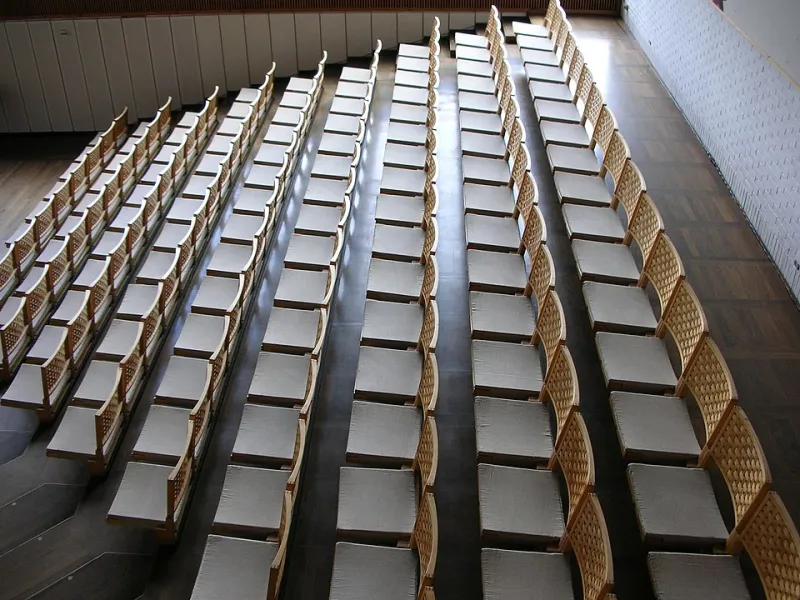
The seat availability in February is genuinely striking. Shows that would require you to buy tickets weeks in advance during peak season often have premium seats available days before the performance. If you're flexible on what you see and you prioritize the quality of the experience over seeing a specific headliner, this is arguably the best month on the calendar.
Temperature-wise, Tokyo in February is cold but manageable — think Chicago in early April. Dress for it and you'll be fine.
How to Read the Spring Window Without Getting Burned
March through May is Shiodome's most glamorous stretch. Cherry blossom season (typically late March through mid-April) draws massive tourist numbers, and venues capitalize on the energy with high-profile bookings. This is when you're most likely to see major international acts, special limited-run theatrical productions, and anniversary events from established Japanese artists.
The catch is that this window requires the most advance planning. Tickets for the genuinely sought-after shows in this period can sell out within hours of going on sale — sometimes within minutes for the biggest names. If spring is your target, you need to be monitoring venue calendars and pre-sale announcements at least two to three months out.
One tactical note: avoid Golden Week (late April through early May) if crowds are a concern. The programming is excellent, but everything else about the experience — transit, dining, hotel pricing — is at its most challenging. If your dates are flexible, the two weeks before Golden Week offer nearly identical programming with a dramatically more manageable city around it.
The September-October Sweet Spot
If spring is Shiodome's blockbuster season, September and October are its awards season — the moment when the district tends to program its most artistically interesting and critically ambitious content.
Fall in Tokyo is spectacular weather-wise (warm, clear, genuinely pleasant), and the entertainment calendar reflects a kind of curatorial confidence that you don't always see in the more commercially pressured spring season. Theater productions get more adventurous. Music programming diversifies. And because this period sits between the late-summer domestic travel rush and the year-end holiday buildup, crowds are notably more manageable than spring.
Ticket availability in September and October is better than spring but tighter than winter — a middle ground that rewards travelers who plan a month or two out rather than the night before.
The Booking Windows That Most Travelers Miss
Japanese ticketing platforms — including those used by Shiodome venues — often have tiered pre-sale windows that aren't prominently advertised to international audiences. Fan club pre-sales, credit card holder access, and venue membership programs all create early access tiers that can get you into premium seating before the general public even knows tickets are available.
For American travelers, the most accessible of these is the credit card pre-sale tier. Several major Japanese ticketing platforms partner with international card networks for early access windows. If you're buying tickets from the US, it's worth checking whether your card qualifies before the general on-sale date.
Venue newsletters are also underutilized by international visitors. Signing up for email updates from Shiodome's major venues — even if the emails arrive in Japanese — gives you advance notice of programming announcements and sale dates. Run them through a translation tool and you'll be ahead of most of the tourist competition.
Connecting the Venues: How the Calendar Interconnects
One of Shiodome's strengths as an entertainment district is that its venues program in loose coordination with each other, which means that a high-demand event at one venue often correlates with interesting programming at neighboring spaces on the same dates. When a major international act is drawing crowds to the district's largest venue, smaller theaters nearby tend to program complementary or counter-programming events that are easier to get into and often equally rewarding.
The practical implication: if you're visiting during a peak period and your first-choice show is sold out, don't just look for another date. Look at what else is happening in the district that same weekend. You may find something better than your original plan.
The Bottom Line
Shiodome rewards travelers who treat the calendar as a strategic document rather than a passive listing. The best experiences aren't always at the most obvious times — and the most coveted seats aren't always out of reach if you know when and how to look for them. Plan with intention, build in flexibility, and you'll find that Shiodome gives back exactly as much as you put into the planning process.