Built Different: The Design Philosophy Behind Shiodome's Performance Spaces That Western Venues Haven't Figured Out Yet
Walk into a major arena in Chicago, Los Angeles, or New York, and you know exactly what you're getting. Concrete ramps. Overpriced beer lines that stretch into the next zip code. Seats that were clearly designed by someone who has never actually sat through a three-hour show. The experience is functional, occasionally electric, and almost always exhausting in ways that have nothing to do with the music.
Then walk into one of Shiodome's flagship performance spaces, and something shifts. It's hard to name at first — the feeling that everything is just working, that the building itself is on your side. That's not an accident. It's the result of a design philosophy so deliberate and so different from the Western model that architects and acoustic engineers who've studied these venues describe them as operating in a fundamentally different category.
So what's actually going on? Let's get into it.
The Seat Is Not an Afterthought
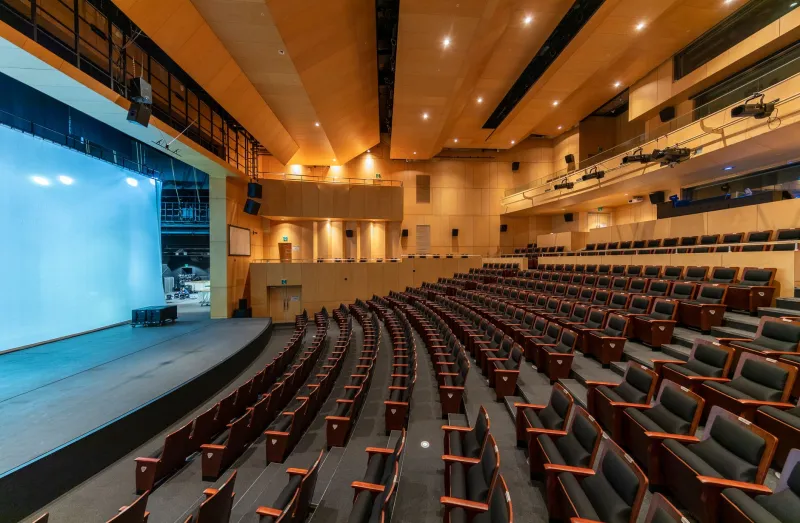
In most American venues, seating is essentially a real estate problem. Pack in as many people as possible, keep the sightlines technically acceptable, and call it a day. Shiodome's venues take the opposite approach — treating the individual seat as the foundational unit of the entire design.
The angle of the rake (that's the slope of the seating sections, for the non-architects in the room) in several of Shiodome's premier halls is noticeably steeper than U.S. standards, which sounds uncomfortable until you realize it means the person in front of you is no longer blocking your view of anything. Seat width allocations are more generous across the board. Armrests are positioned to actually allow two adults to use them simultaneously — a concept that apparently hasn't made it across the Pacific yet.
But it goes deeper than physical dimensions. The orientation of each seating section is calibrated so that even the cheapest tickets in the house offer a reasonably centered perspective on the stage. Sound designers and architects work in tandem from the earliest stages of construction, rather than the more common Western approach of finishing the building and then figuring out where to put the speakers.
Acoustic Engineering as a First Principle
This is where things get genuinely fascinating. In many Western venues — particularly the multi-purpose arenas that dominate the American concert landscape — acoustic performance is essentially a compromise. The building is designed to host basketball, hockey, conventions, and concerts, which means it's optimized for exactly none of them.
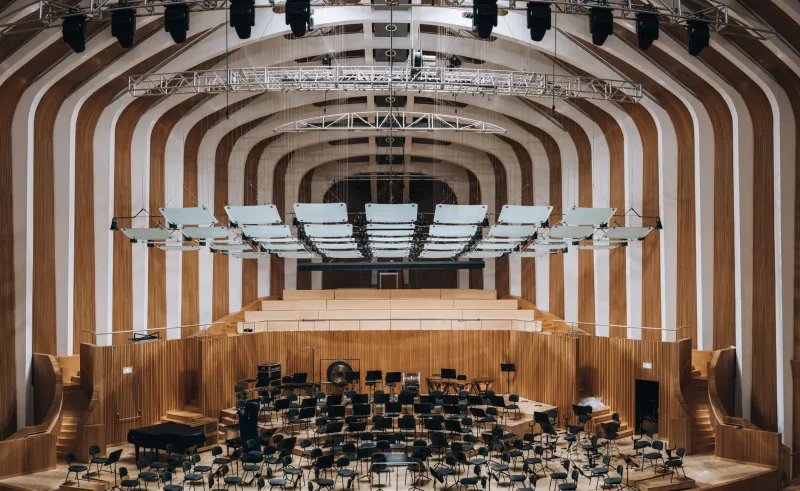
Shiodome's dedicated performance spaces don't make that compromise. Several of the district's concert halls were built with a single acoustic mission, and the results are audible within the first thirty seconds of a performance. Sound engineers who've worked both sides of the Pacific consistently describe Shiodome's halls as more honest — meaning the room doesn't fight the music, it supports it.
This involves everything from the geometry of the ceiling (irregular surfaces scatter sound in ways that prevent the deadening effect of flat planes) to the materials used in wall paneling (dense, layered composites that absorb specific frequencies without killing the room's natural resonance). Some halls incorporate adjustable acoustic panels that can be repositioned depending on whether the night's program is orchestral, amplified pop, or theatrical. The flexibility is built in from the start, not bolted on as an afterthought.
For international artists performing in Shiodome for the first time, this often comes as a genuine surprise. The monitors feel different. The mix feels different. Several touring musicians have described the experience of soundcheck in a Shiodome venue as unexpectedly emotional — the room responds to music in a way that larger, more acoustically compromised spaces simply don't.
Crowd Flow as Choreography
Here's something American concert-goers rarely think about until it goes wrong: how a venue moves people. Entry, exit, bathroom breaks, merchandise lines, emergency egress — the logistics of managing thousands of bodies in a shared space is its own design discipline, and Shiodome's venues treat it that way.
The corridor widths in several of the district's major halls are calibrated to handle peak intermission traffic without creating the crushing bottlenecks that are basically a given at comparable U.S. venues. Restroom ratios — particularly for women — are dramatically better than what American building codes typically require. Concession layouts are designed to minimize the distance any patron has to travel from their seat, reducing the anxiety of missing something while you're waiting in line.
Perhaps most notably, the entry and exit sequencing at Shiodome venues tends to be far more organized than the free-for-all that characterizes most American shows. Clear signage, staff positioned at decision points rather than just at doors, and a general cultural expectation of orderly movement all contribute to an arrival and departure experience that feels less like a survival situation and more like, you know, attending a cultural event.
Artist Accessibility and the Backstage Philosophy
One dimension of Shiodome's venue design that rarely gets discussed outside of industry circles is how these spaces treat the people actually performing in them. Backstage facilities in many American arenas are notoriously grim — cramped, poorly ventilated, and clearly designed as an afterthought relative to the revenue-generating front-of-house spaces.
Shiodome's performance venues tend to invert this logic. Dressing rooms are proportionate and well-appointed. Load-in logistics are planned to minimize the physical burden on touring crews. Stage access — the path a performer takes from preparation to performance — is treated as a meaningful part of the overall experience, not just a functional corridor.
This matters more than it might seem. Artists who feel well-supported by a venue perform differently. The relationship between physical environment and creative output is real, and Shiodome's design philosophy seems to understand this in a way that translates directly to what audiences experience from their seats.
What American Cities Are Missing
None of this is magic, and none of it is beyond the reach of American venue developers. The gap between what Shiodome offers and what most U.S. cities deliver isn't primarily a budget gap — it's a priorities gap. It reflects a different answer to the foundational question: what is this building actually for?
In the American model, the answer is usually some version of "maximum revenue extraction." In Shiodome's model, the answer seems to be closer to "the best possible experience for everyone inside it" — with the implicit understanding that this approach generates loyalty, repeat attendance, and a reputation that attracts world-class performers and audiences willing to travel from anywhere to be there.
The good news for anyone reading this from the U.S. is that you don't have to wait for your home city to figure it out. The experience is already there, running every night of the week in one of Tokyo's most dynamic entertainment districts. And once you've felt what a venue designed around you actually feels like, it's genuinely hard to go back.
Check what's on at Shiodome this season at attend-shiodome.com — your seats are waiting, and they were designed to actually be worth sitting in.